

Reviewed by Stead, Pet Food Specialist at PetsCrazy with over a decade of hands-on experience matching cat food to Malaysian households.
Last updated: July 2026
Walk into any Malaysian pet shop or scroll Shopee for 5 minutes and you’ll find more “best cat food” lists than you can read. Royal Canin, Whiskas, Acana, Nature’s Protection, dozens of brands all claiming the same thing.
The honest truth is there is no single best cat food in Malaysia for every cat. The best food is the one that matches your cat’s age, lifestyle, and any specific issues like hairballs, sensitive digestion, urinary support, or indoor weight gain. Once those basics are right, most cats settle into a steady routine, and you stop wasting money on random trial bags.
This is a working pet store’s view of the cat food market in Malaysia. We carry many of these brands ourselves, and where we don’t, we’ll say so plainly. The goal is to help you pick a food that fits your cat, not one that just looks good on a shelf.
Reading in Chinese? See our 马来西亚猫粮排名 2026 guide.
Quick answers: the most-asked questions about cat food in Malaysia
What is the best cat food in Malaysia?
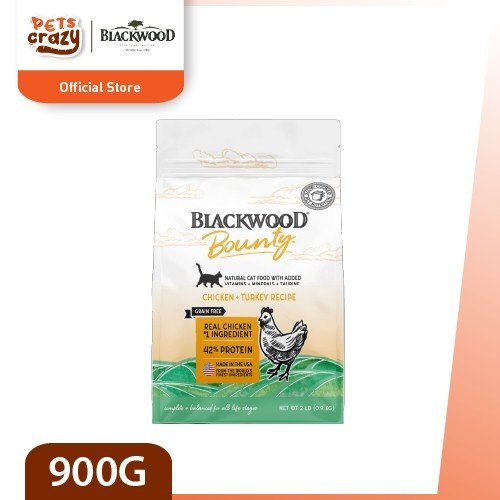
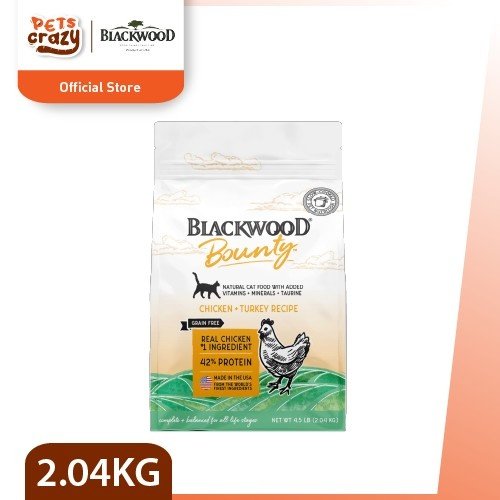
There is no single best cat food brand. For most healthy adult cats in Malaysia, the strongest options across price tiers are Royal Canin and Hill’s Science Diet (vet-recommended premium), Acana and Taste of the Wild (ultra-premium grain-free), Nature’s Protection and Blackwood (mid-premium with sensitive-stomach formulas), Belif and CarniVital (mid-tier with strong everyday and urinary support options), and Whiskas or SmartHeart for budget-conscious households. The right pick depends on your cat’s age, indoor vs outdoor lifestyle, and any health issues.
What is the healthiest brand of cat food?
“Healthiest” depends on the cat. For a healthy adult cat, brands with a clearly named meat as the first ingredient, complete-and-balanced labelling, and moderate to high protein (around 30%+) are generally the strongest picks. Acana, Taste of the Wild, Nature’s Protection, and Blackwood meet that bar. For cats with diagnosed medical conditions, the healthiest food is whichever therapeutic diet your vet prescribes (usually a Royal Canin or Hill’s Prescription line). Don’t pick a “healthiest” brand for a sick cat without a vet check first.
What are the top 10 best cat food brands in Malaysia?
The 10 cat food brands most worth considering in Malaysia in 2026 are: 1. Royal Canin, 2. Hill’s Science Diet, 3. Acana, 4. Taste of the Wild, 5. Nature’s Protection, 6. Blackwood, 7. Belif, 8. CarniVital, 9. SmartHeart, 10. Whiskas. We compare all of these in the table below, and we tell you which ones we stock at PetsCrazy.
Which cat food do vets recommend in Malaysia?
Malaysian vets most often recommend Royal Canin and Hill’s Science Diet because both have large veterinary research programmes and prescription formulas for medical conditions like urinary disease, kidney issues, food sensitivities, and weight management. For cats without medical issues, vets also commonly suggest Acana or Taste of the Wild for high-protein diets, and Nature’s Protection or Blackwood for cats with sensitive stomachs or skin issues. If your vet prescribes a therapeutic diet, follow that recommendation rather than picking a commercial brand on your own.
Best Cat Food in Malaysia 2026, at a Glance
For most cats in Malaysia in 2026, the best cat food depends on budget and needs. Our picks by tier: Royal Canin and Hill’s Science Diet for vet-recommended and prescription needs, Acana and Taste of the Wild for ultra-premium grain-free, Belif and Blackwood for mid-tier everyday value (Belif adult dry food starts around RM8.90), and SmartHeart or Whiskas for budget. All ten are compared further down with live RM prices, stocked and tested by a real Malaysian pet store.
Best Cat Food in Malaysia by Category
Vet-recommended and prescription
Royal Canin and Hill’s Science Diet lead for specialised needs, including kidney and urinary care. Best when your vet has named a condition.
Ultra-premium and grain-free
Acana and Taste of the Wild for high-protein, grain-free diets that mimic a natural meat-rich intake.
Mid-tier everyday value
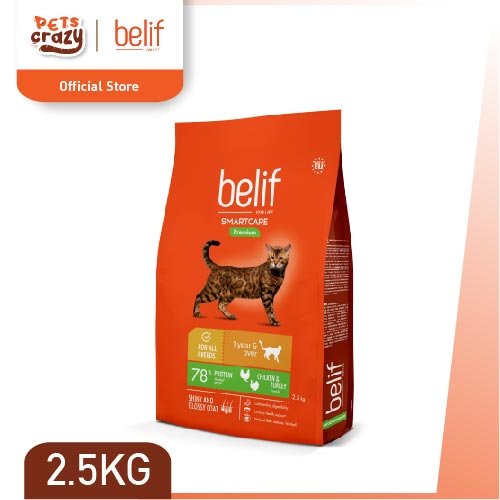
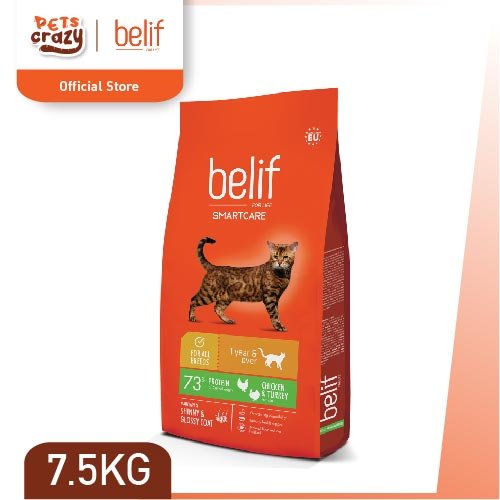
Belif and Blackwood give a real step up from supermarket food without the import price. Belif adult dry food starts around RM8.90 at PetsCrazy.
Budget and supermarket
SmartHeart and Whiskas are the accessible everyday options for cost-conscious owners.
Why the best cat food in Malaysia depends on your cat
Kittens, adult cats, and seniors all have different nutrition needs. Kittens grow fast and need more protein and calories per kilogram of body weight. Adult cats need a balanced maintenance diet to hold a healthy weight. Seniors often do better on easier-to-digest formulas with moderate calories and joint or kidney support.
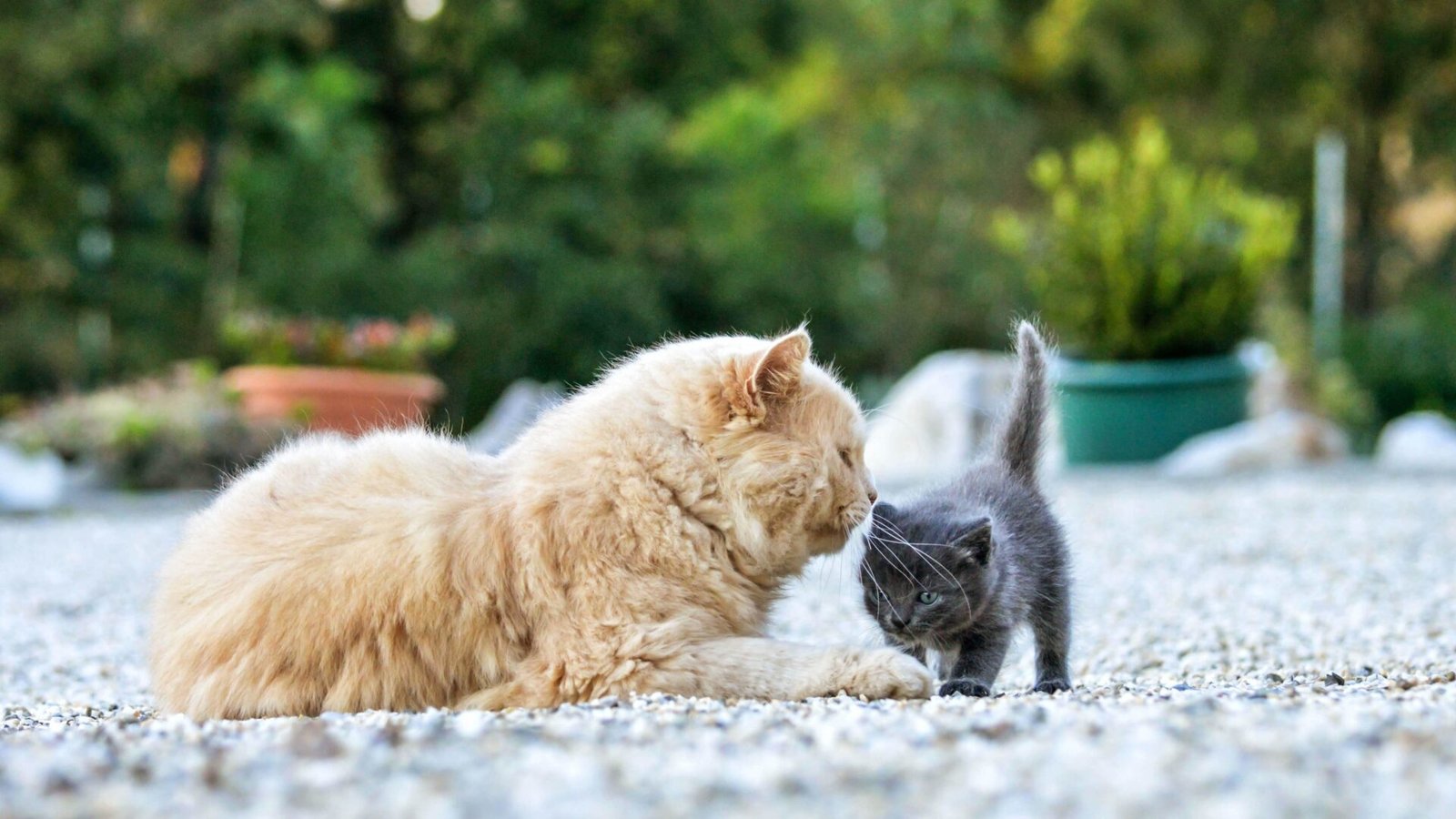
Lifestyle matters too. Indoor-only condo cats burn fewer calories than outdoor kampung cats, so the same bowl size can quietly cause weight gain. Heavy-coated breeds like Persians and British Shorthairs swallow more fur and benefit from hairball-control formulas. Cats that don’t drink much water do better with wet food a few times a week.
Wet vs dry cat food (and why most owners do both)
For a wet-food-specific deep dive with brands, costs and KL storage tips, see our best wet cat food in Malaysia 2026 guide.
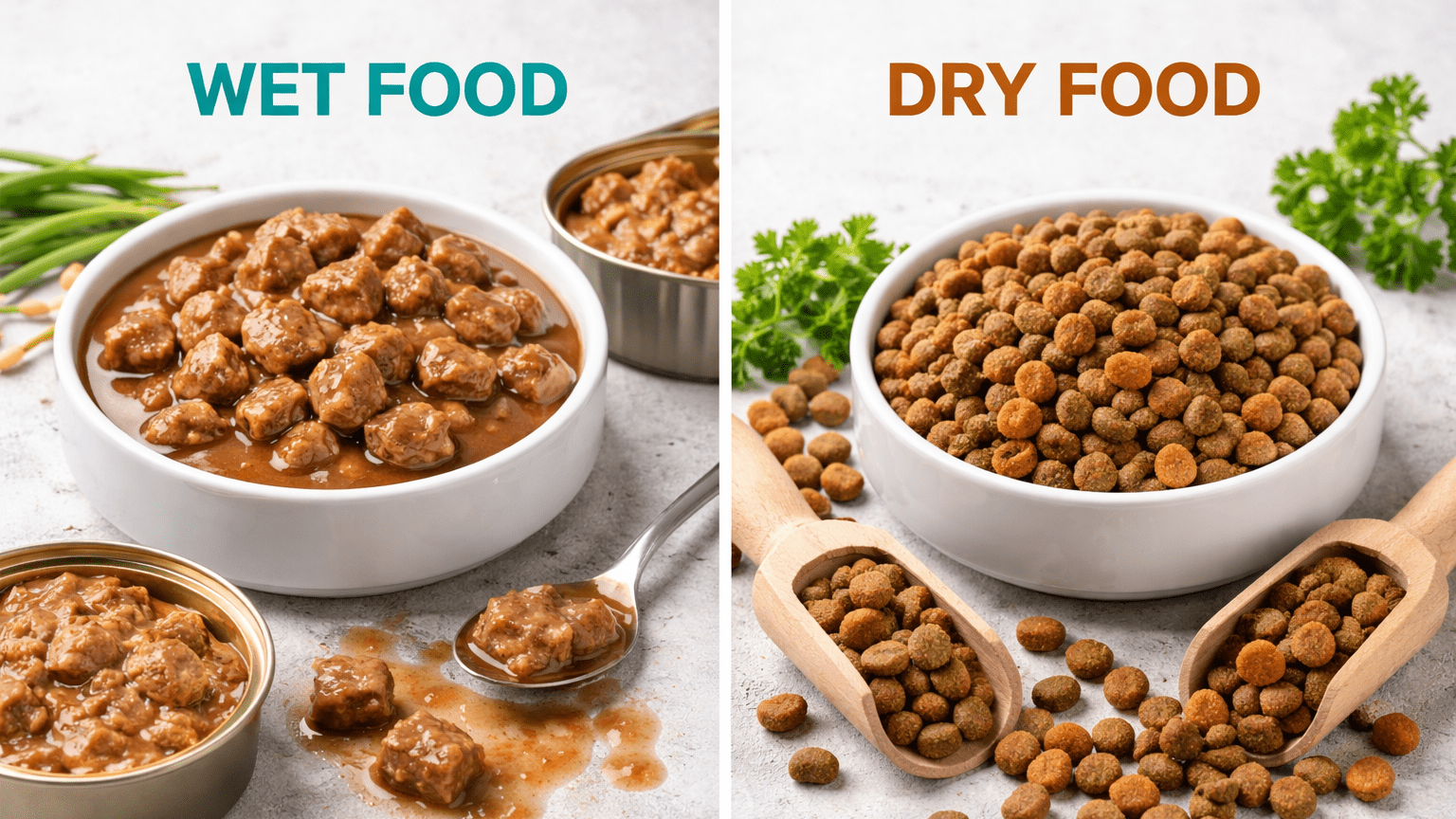
Dry kibble is the most common base for cat food in Malaysia. It’s affordable, easy to store in our humidity (sealed container), and good for measured feeding. A solid dry food with a clear meat first ingredient is enough for many healthy adult cats.
Wet food is higher in moisture (75%+ water), helps cats that don’t drink much, and works well for picky or senior cats with weaker appetites. It’s more expensive per meal and must be refrigerated once opened.

In practice, most owners use dry food as the base and add wet a few times a week for hydration. Browse our cat food collection to compare dry, wet, and freeze-dried in one place.
Best cat food brands in Malaysia: comparison table (2026)
This table covers the cat food brands most widely available in Malaysia across all price tiers. We stock some of these ourselves and others we don’t, but we include them all so you can make a fair comparison. Brands available at PetsCrazy are marked in bold under “Where to Buy”.
| Brand | Tier | Best For | Protein % (typical) | Price (1.5kg approx.) | Where to Buy |
|---|---|---|---|---|---|
| Royal Canin | Premium (Vet) | Breed and condition-specific diets | 30 to 34% | RM 95 to RM 150 | Pet stores, veterinary clinics |
| Hill’s Science Diet | Premium (Vet) | All life stages, vet-recommended | 30 to 34% | RM 90 to RM 140 | Pet stores, veterinary clinics |
| Acana | Premium Holistic | High-protein, grain-free, sensitive cats | 35% | RM 130 to RM 180 | Premium pet retailers |
| Taste of the Wild | Premium Holistic | Active and grain-free diets | 32% | RM 90 to RM 130 | Specialty pet stores |
| Nature’s Protection | Mid-premium | Indoor cats, sensitive digestion, skin and coat | 32% | RM 70 to RM 95 | PetsCrazy |
| Blackwood | Mid-premium | Sensitive stomachs, slow-cooked formulas, indoor adult cats | 30% | RM 75 to RM 110 | PetsCrazy |
| Belif | Mid-tier | Everyday adult feeding, urinary health, kitten growth | 30% | RM 45 to RM 70 | PetsCrazy |
| CarniVital | Mid-tier | Holistic feeding, urinary support, hair and skin, kitten | 30% | RM 50 to RM 80 | PetsCrazy |
| SmartHeart | Supermarket | Affordable everyday feeding, widely available | 28% | RM 30 to RM 55 | Supermarkets, Shopee, Lazada |
| Whiskas | Supermarket | Budget-friendly, widely available | 28% | RM 25 to RM 40 | Supermarkets, Shopee, Lazada |
Our honest take: Acana and Taste of the Wild win on ingredient quality if budget allows. Nature’s Protection and Blackwood hit the mid-premium sweet spot for most Malaysian households. Belif and CarniVital are the best upgrades from supermarket kibble, especially for urinary or kitten formulas. Whiskas and SmartHeart are fair budget picks if paired with wet food a few times a week.
How to read a cat food label in Malaysia
The marketing on the front of the bag is mostly noise. The useful information is on the back. Start with the ingredient list.
Look for a clearly named meat near the top, like chicken, salmon, tuna, or turkey. These are usually a better starting point than vague terms like “meat and animal derivatives”. If the first three ingredients are mostly cereals, by-products, or “animal protein meal” without a species name, the food leans more filler than nutrition.
Next, check the Guaranteed Analysis panel. Cats are obligate carnivores, so they need a higher protein content than dogs. Look for at least 28 to 30% protein on dry food, ideally more for active or younger cats. Fat should sit roughly between 12 and 20% depending on activity level. Moisture is usually around 8 to 10% for dry food and 75%+ for wet.
Helpful extras to scan for: taurine (essential for cat heart and eye health), omega-3 for skin and coat, prebiotics for digestion, and cranberry or controlled minerals for urinary support if relevant.
The AAFCO standard is what most major brands follow. If the label says “complete and balanced to AAFCO standards” for your cat’s life stage (kitten, adult, all life stages), it meets minimum nutritional requirements.
Matching cat food to your cat’s needs with PetsCrazy
If your cat is healthy with no special issues, a balanced dry kibble with good meat content plus wet food a few times a week is a solid routine. For specific issues, here’s how we’d start:
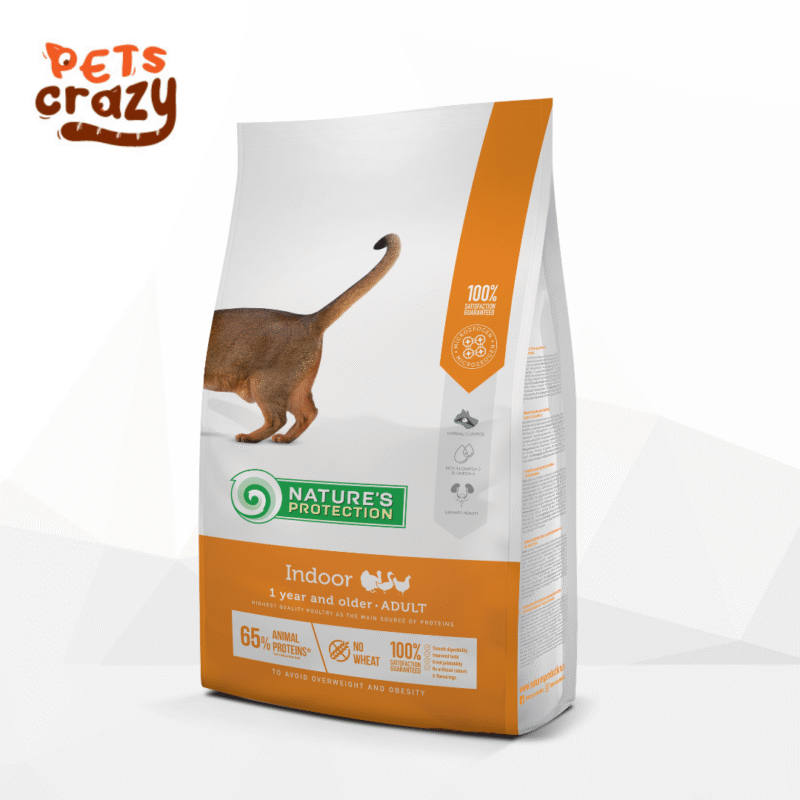
For indoor cats and hairballs, look at our Nature’s Protection Indoor Adult Cats with Poultry or the Blackwood Indoor Formula range. Both are formulated for lower activity levels and include fibre to help move swallowed fur through the gut. Daily brushing helps too, more than most owners realise.
For sensitive digestion or soft stools, our Nature’s Protection Sensitive Digestion Cats with Poultry and Araton Cat Food with Herbs are both gentle starting points. Both use limited-ingredient recipes designed for cats prone to gut upset.
For urinary support, two options we stock: Belif Urinary Health with Poultry and CarniVital Adult Cat with Urinary Support. Both are formulated for cats prone to urinary tract issues. Important: if your cat is straining to pee, peeing outside the litter box, or you see blood in urine, get a vet check first. Urinary diets help prevent recurrence, but active symptoms need veterinary attention.
For kittens, choose a kitten-labelled formula with at least 30% protein for growth. We stock Belif Kitten with Poultry, CarniVital Kitten Junior with Growth Formula, Araton Cat Dry Food Kitten, and Oak’s Farm Grain Free Kitten with Salmon. Stay on kitten food until your cat reaches one year old.
For weight management, the issue is usually not the food but the portion. Measure meals (don’t free-feed), reduce treats, and switch to a lower-calorie indoor formula if needed. Nature’s Protection Indoor and Blackwood Slow Cook are gentler on calorie density without skimping on protein.
Which cat food do Malaysian vets recommend?
If you ask most veterinarians in Malaysia which cat food brands they recommend, two names come up consistently: Royal Canin and Hill’s Science Diet. Both invest heavily in veterinary nutrition research and produce prescription formulas for specific medical conditions, including urinary disease (Royal Canin Urinary, Hill’s c/d), kidney support (Royal Canin Renal, Hill’s k/d), food sensitivities (Hill’s z/d), and weight management. Prescription diets are typically sold directly through veterinary clinics.
For cats without medical issues, vets also commonly recommend premium holistic brands like Acana and Taste of the Wild for their high meat content and minimal processing. In the mid-premium range, Blackwood is often suggested for cats with sensitive stomachs because of its slow-cooked manufacturing process, and Nature’s Protection gets mentions for indoor and skin-and-coat formulas.
PetsCrazy’s honest position: We stock Nature’s Protection, Blackwood, Belif, CarniVital, Araton, Oak’s Farm, and CLUB4PAWS because these brands cover the everyday and sensitive-issue needs that most Malaysian cat owners actually face. We don’t carry prescription therapeutic diets like Royal Canin Veterinary or Hill’s Prescription, because those require veterinary oversight and we think that’s the right way for them to be sold. Your vet will provide those directly if your cat needs them.
Malaysia (per DVS) doesn’t run a mandatory AAFCO-equivalent nutritional adequacy test, so the brand’s own AAFCO compliance claim and your vet’s recommendation matter more here than in some other markets.
How to switch your cat’s food safely
Cats are more sensitive to sudden food changes than dogs, partly because they’re creatures of habit and partly because their gut takes time to adapt to new ingredients. Switching too quickly is the most common cause of vomiting, diarrhoea, or a cat that simply refuses to eat.
The safe method is a gradual transition over 7 to 10 days. Start with about 25% new food mixed with 75% old food for 2 to 3 days. Move to 50/50 for another 2 to 3 days, then 75% new and 25% old for the final 2 to 3 days, and only then go fully to the new food. If your cat has a sensitive stomach, stretch this to 14 days.
While transitioning, keep the rest of the routine stable (same bowls, same feeding times, same litter setup) and watch the litter box. Mild changes in stool are normal during a switch. If your cat has strong diarrhoea, repeat vomiting, or refuses to eat for more than 24 hours, stop the transition and contact your vet.
When to see a vet instead of just changing cat food
Cat food can solve everyday issues, but it’s not the answer to everything. Don’t just keep changing brands if your cat is clearly unwell.
See a vet if your cat has frequent vomiting (more than once a week), persistent diarrhoea, sudden weight loss or gain, urinary issues like straining or blood in urine, prolonged loss of appetite, or visible lethargy. These can be signs of underlying issues like urinary disease, kidney problems, hyperthyroidism, dental disease, or food allergies that need a proper diagnosis.
Once your vet has assessed your cat and, if needed, suggested a specific diet, you can use PetsCrazy to find a matching food and stay consistent with it long-term.
Recommended cat food categories from PetsCrazy
For healthy adults, start with our Nature’s Protection adult cat food, which includes the Indoor Adult formula and the Sensitive Digestion variant, plus a Wheat Free Super Premium option.
For sensitive stomachs or skin, try our Blackwood Slow Cook range or Araton Cat Food with Herbs. Both are designed for cats prone to digestive upset.
For everyday value, our Belif cat food range covers Adult Chicken & Turkey, Kitten Poultry, Urinary Health, plus canned wet options. Locally formulated and priced for daily feeding.
For urinary support, both Belif Urinary Health with Poultry and CarniVital Adult Cat with Urinary Support are formulated specifically for cats with a history of urinary issues. Pair with vet guidance.
For premium grain-free, Oak’s Farm Grain Free Super Food uses high-quality protein sources without grain filler.
For wet food and hydration, our Nature’s Protection Prime Multiple Functions wet cat food set is a clean option, and Belif canned wet options pair well with any of the dry foods above.
Frequently asked questions about cat food in Malaysia
Is expensive cat food worth it in Malaysia?
It depends on your cat. Premium brands like Acana (RM 130+/1.5kg) use higher-quality ingredients with denser nutrition, so you often feed less per meal. Mid-premium brands like Nature’s Protection or Blackwood (RM 70 to RM 100) offer a strong balance of quality and value for most healthy adult cats. For cats with no special requirements, a good mid-tier brand is usually enough. Save premium spend for cats with sensitivities or specific health needs that benefit from specialised formulas.
What cat food is best for indoor cats in Malaysia?
Indoor cats burn fewer calories than outdoor cats, so they benefit from formulas with moderate fat, slightly lower calorie density, and added fibre for hairball control. Nature’s Protection Indoor Adult Cats with Poultry and Blackwood Indoor Formula both work well for indoor Malaysian cats. Pair with daily brushing and measured feeding (no free-feeding) to prevent the slow weight gain that’s common in condo cats.
How much does it cost to feed a cat in Malaysia per month?
Monthly costs vary by cat size and brand tier. For a 4 to 5kg adult cat, expect roughly: RM 30 to RM 55 per month on supermarket brands like Whiskas or SmartHeart, RM 60 to RM 100 on mid-premium brands like Nature’s Protection, Blackwood, Belif, or CarniVital, and RM 130 to RM 220 on premium brands like Acana or Taste of the Wild. Larger cats and multi-cat homes scale up. These estimates are for dry food only; add RM 30 to RM 80 if you include wet food a few times a week.
What is the best wet cat food in Malaysia?
For wet food, the strongest picks in Malaysia are Nature’s Protection Prime (premium European), Cindy’s Recipe Original (real white meat tuna and chicken), Fancy Feast (highly palatable for picky eaters), Belif Canned Wet Food in Gravy or Goat Milk Series, and Whiskas pouches for budget-friendly daily feeding. Wet food works best as a complement to dry, two to four times a week, especially for cats that don’t drink enough water.
What is the best dry cat food for picky cats?
Picky cats often respond well to higher meat content and stronger aroma. Try a small bag of Acana, the Nature’s Protection Wheat Free Super Premium, or one of the Araton variants before committing to a large size. Freeze-dried toppers can also help. The trick with picky cats is to introduce slowly and not rotate too often, because erratic switching can make pickiness worse.
Is grain-free cat food better than regular?
Not necessarily. Cats are obligate carnivores and don’t strictly need grain in their diet, but most well-formulated cat foods (grain-friendly or grain-free) are nutritionally complete. Grain-free is genuinely useful for cats with diagnosed grain sensitivities, which are uncommon. For most cats, ingredient quality and protein content matter more than the grain-free label.
What is the best cat food for kittens in Malaysia?
Kittens need higher protein and calories to support fast growth. Look for formulas labelled “kitten” or “all life stages” with at least 30% protein. Strong kitten options stocked at PetsCrazy include Belif Kitten with Poultry, CarniVital Kitten Junior with Growth Formula, Araton Cat Dry Food Kitten, and Oak’s Farm Grain Free Kitten with Salmon. Royal Canin Kitten and Hill’s Science Diet Kitten are widely available at vet clinics. Stay on kitten food until your cat reaches one year old, then transition to adult formula over 7 to 10 days.
What cat food should senior cats eat?
Senior cats (typically 8 years and older) often benefit from formulas with moderate protein for muscle maintenance, easier digestibility, joint-support ingredients like glucosamine, and controlled phosphorus to support kidney health. Hill’s Science Diet Senior, Royal Canin Ageing, and other dedicated senior lines from premium brands are reasonable picks. If your senior cat has been diagnosed with kidney disease, follow your vet’s prescription rather than picking a commercial senior brand.
Can I mix different cat food brands together?
Yes, you can mix brands, but introduce any new food gradually over 7 to 10 days to avoid stomach upset. Mixing a high-quality dry kibble with a small amount of wet food from a different brand is common and generally fine. Just make sure both foods are nutritionally complete on their own, and don’t mix kitten food with adult food unless your vet advises it.
Final take: finding the best cat food in Malaysia with PetsCrazy
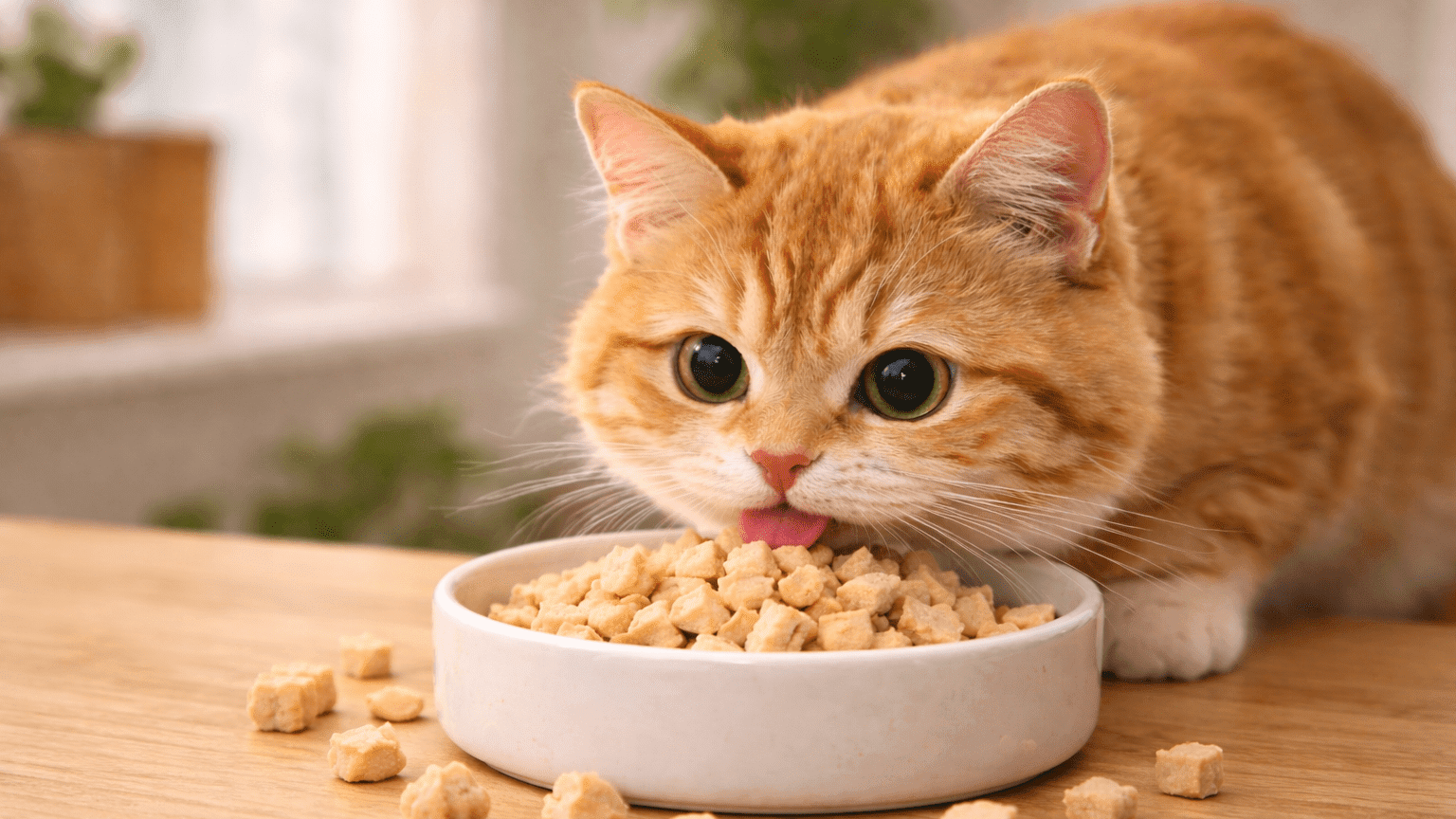
Choosing the best cat food in Malaysia gets easier when you follow a few simple steps: know your cat’s age, lifestyle, and any specific issues; decide whether dry, wet, or a mix fits your household; and check the label for real meat ingredients and AAFCO-complete labelling.
From there, switch foods slowly, watch your cat’s response, and involve your vet when something doesn’t feel right. The right cat food is the one that keeps your cat at a healthy weight, with steady energy, a clean coat, and a normal litter box.
When you’re ready to pick a food, PetsCrazy is here with carefully selected options and clear information, so you don’t have to scroll through low-quality choices. Browse our full cat food collection, or start with our recommended brands: Nature’s Protection, Blackwood, Belif, and CarniVital.







LEAVE A COMMENT